I started my career in software in 1997, but the affair began long before that. I was mesmerised by what those emerging desktop computers could do. Like a lot of my generation including our founder and CEO, Marc Benioff, I too was writing and selling video games from my bedroom.
Then I did what many developers did at the time: I quit coding and followed the money.
There was no such thing as a “rockstar developer” in Y2K. Developers were the people in the room who were told what to build, not the people deciding what to build and I’ve been a frustrated ex-developer ever since. That’s a sad thing: having a creative itch you can’t scratch.
I tried keeping software development as a hobby. But there was a problem – good software takes time. Lots of it. Mastery requires understanding an ever-expanding stack of technologies that changes faster than you can learn it. You can’t build great software on Tuesday evenings when the technology has changed by Wednesday.
So the itch remained – until last year. I started playing with Cursor, one of the pioneers of AI-assisted coding and it blew my mind in a way technology has only done a handful of times in my career.
But there was a catch. The models were impressive but they weren’t autonomous enough to be truly transformative. You still had to be an experienced developer to get the most out of them. I became perhaps twice as productive at most. Two times is impressive but it wasn’t a revolution.
So fast forward six months and I’ve been building software in my spare time with Claude Sonnet. I haven’t even needed the top-tier models. My estimate? I’m roughly 10x more productive.
The ideas are flowing again. That creative itch I had in 1997 is finally being scratched. My hobby is back..
The revolution is happening below the radar
If you aren’t actually building software with AI, it is difficult to appreciate how quickly this technology is advancing. The hype around “agentic AI” doesn’t capture it. You have to actually use it. The technology is moving from helping developers write code to fundamentally changing who can create software and that is a much bigger deal.
It creates an uncomfortable truth for enterprise retail. Technology revolutions expose incumbents and we saw it with the internet. We saw it with mobile too and we’re now seeing it again with AI.
The pattern is consistent – new technology arrives and the incumbents underestimate it. They experiment around the edges. They create committees and run pilots then wait for the technology to become “enterprise ready”. Meanwhile, someone else is building the future. Retailers are particularly vulnerable because they are extraordinarily good at optimising the present not the future.
The winners will be the retailers capable of imagining the future.
The software build equation
Everyone talks about how AI has fundamentally changed the buy versus build equation and they’re right but they’re missing the more important point.
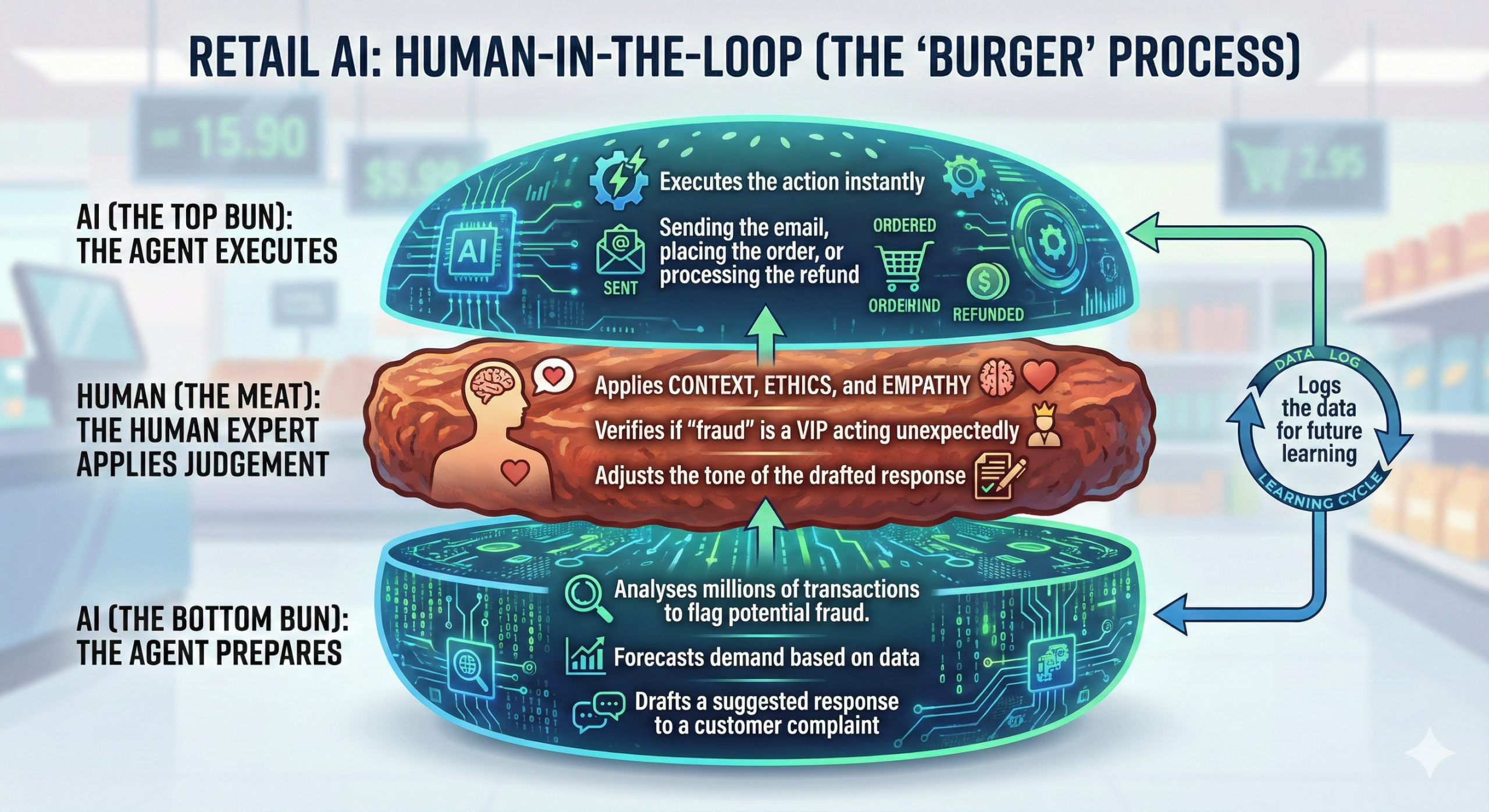
AI is democratising software creation. For decades, the ability to build software was concentrated in a relatively small technical workforce and AI changes that. A retailer’s merchandiser, operations manager, supply-chain expert or commercial director can increasingly take a business problem and turn it into working software.
Not perfectly and not without governance but at a speed that would have been unimaginable even two years ago.
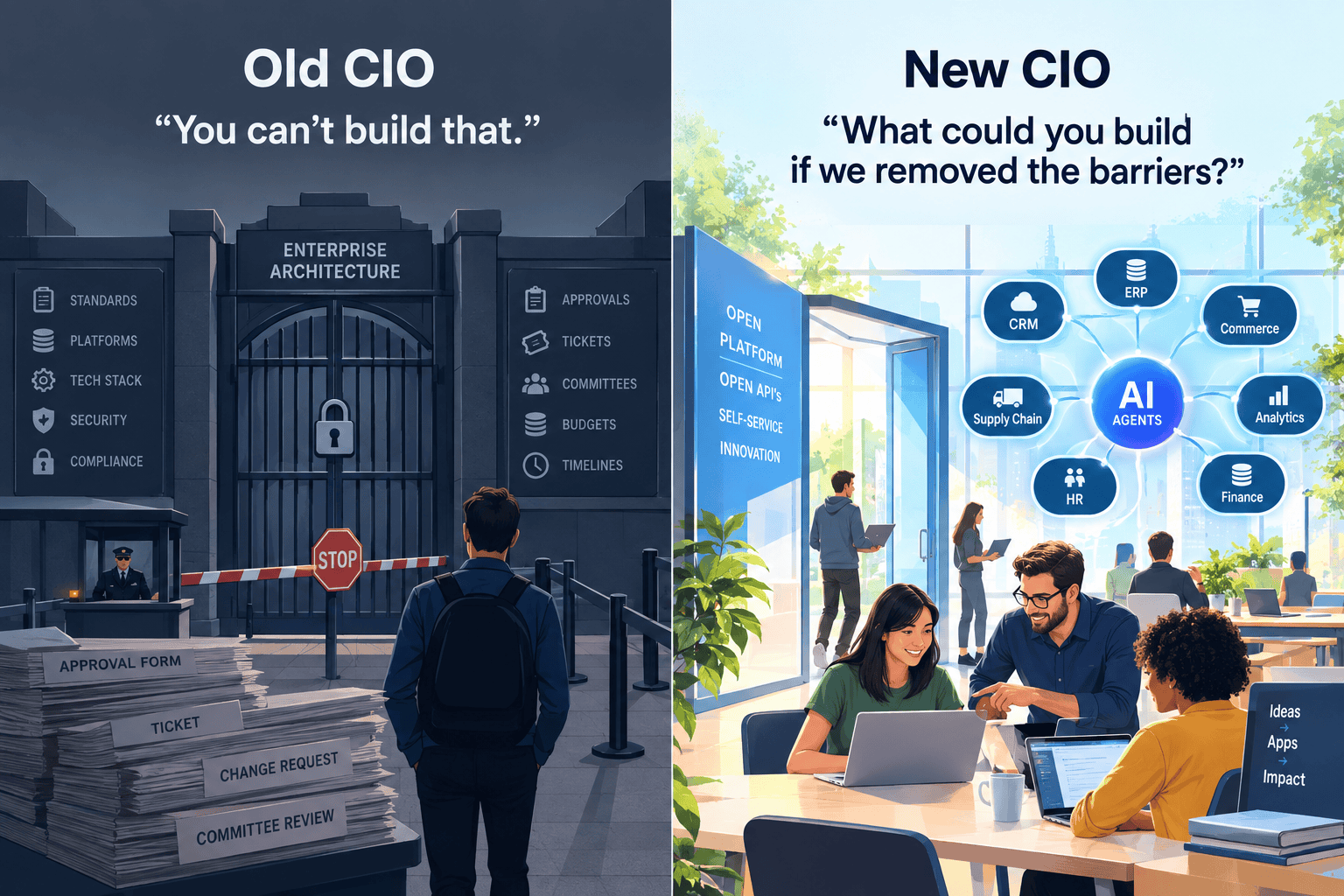
That changes the role of the CIO. The CIO shouldn’t be the person who says “You can’t build that.” but instead should be asking “What could you build if we removed the barriers?”. The best retailers will unleash the creativity of their workforce. Give people the tools. Give them the guardrails and give them access to the fundemental back-end systems that power the business and let them create an agentic workforce to work alongside their everyday colleagues.
The core doesn’t disappear but the edges explode
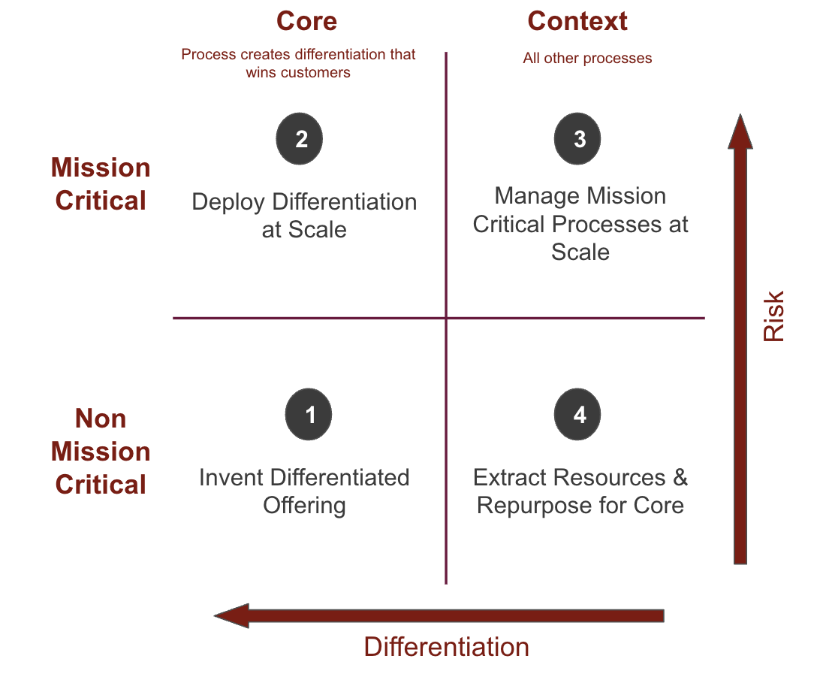
This doesn’t mean core platforms disappear. They won’t. Retailers will continue to rely on major platforms for ERP, CRM, commerce, payments, customer data, supply chain and other mission-critical capabilities. But competitive advantage increasingly won’t come from the core, it will come from what happens around it. The thousands of small pieces of software that connect, extend and reinvent how a retailer operates.
The micro-app that solves a problem nobody thought was big enough for a vendor to solve. The script that eliminates five manual steps and the agent that connects six systems and gets a job done while everyone else is still opening tabs. The retailer that can build these things in hours rather than months will compound an enormous productivity advantage.
This is how you leapfrog and that is not by replacing everything but by building towards an agentic enterprise.
The end of app-flipping
Think about how retailers work today. A business user has a goal – they open Slack. Then Salesforce. Then the commerce platform. Then the ERP. Then a spreadsheet. Then an analytics tool. Then email. Then they copy and paste everything back into something else.
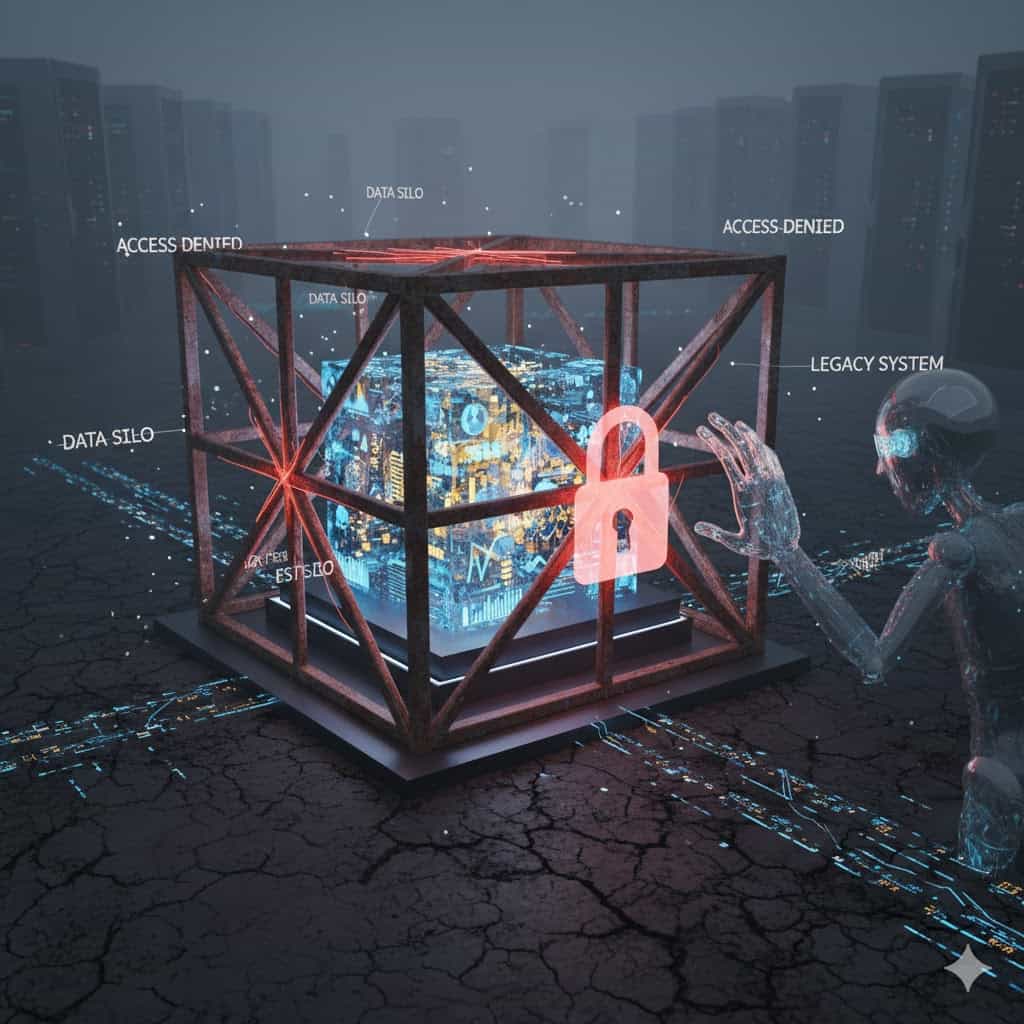
Retailers have built an economy around app-flipping and dark data which agentic AI will soon make look ridiculous. The future isn’t a colleague becoming better at navigating twelve applications. The future is the worker saying the goal they want to achieve and their AI operating system they’ve crafted will orchestrate the work.
The employee won’t adapt themselves to the software. The software will adapt to the employee.
What happens to software vendors?
This is where being inside the software industry gets interesting. Any software subscription that is essentially a polished user interface sitting on top of a database is about to face a brutal question: For fifteen years, enterprises tolerated rigid SaaS point solutions because the alternative was expensive custom development.
Building software was slow and maintaining it was expensive. Software development has been expensive. AI changes the maths. Give a team Slack, Claude Code and APIs into your critical business systems and they can help one by one build an agentic enterprise.
And then comes the mess – Shadow IT gets a steroid injection.
There is, of course, a problem. AI makes creating software dramatically cheaper but it also makes creating bad software dramatically cheaper. Give 10,000 colleagues AI coding tools and you don’t just get innovation but potentially undocumented applications, duplicate databases, security vulnerabilities, ungoverned APIs and future technical debt.
The next great enterprise software opportunity may therefore not be helping companies build software. It will be helping them control what they build. Orchestration. Testing. Security. Observability. Governance. Lifecycle management.
The infrastructure for an enterprise where software creation is no longer restricted to the software department.
The smart software vendors will be platform companies
The winning software vendors will be the platforms that makes AI-generated software safe and predictable with accelerators, secure building blocks, APIs, Identity, Data, Integration, Testing, Observability & Governance
The most immediate opportunity for retail isn’t rebuilding the core. It’s building the bridges. Connect the legacy platform. Automate the ugly workflow. Expose the data. Build the micro-app and make the systems talk.
This is software finally bending itself around the enterprise’s proprietary business logic rather than forcing the enterprise to bend around a vendor’s workflow and that’s a profound change.
The people become the developers
AI is turning millions of business people into potential software creators and that changes where innovation lives.
For decades, companies tried to centralise technology but the future may just be about democratising it. The best retailers will embrace the creativity of their workforce and the best CIOs will remove friction rather than create it. The best software vendors will move up the stack into platforms and infrastructure and trust and the best businesses will stop asking: “What software should we buy?” and instead will start asking “What could we build on this platform?”
That is a much more dangerous question and potentially, a much more valuable one.
Developers, developers, developers – for the first time in my career, there might be a few billion of us.