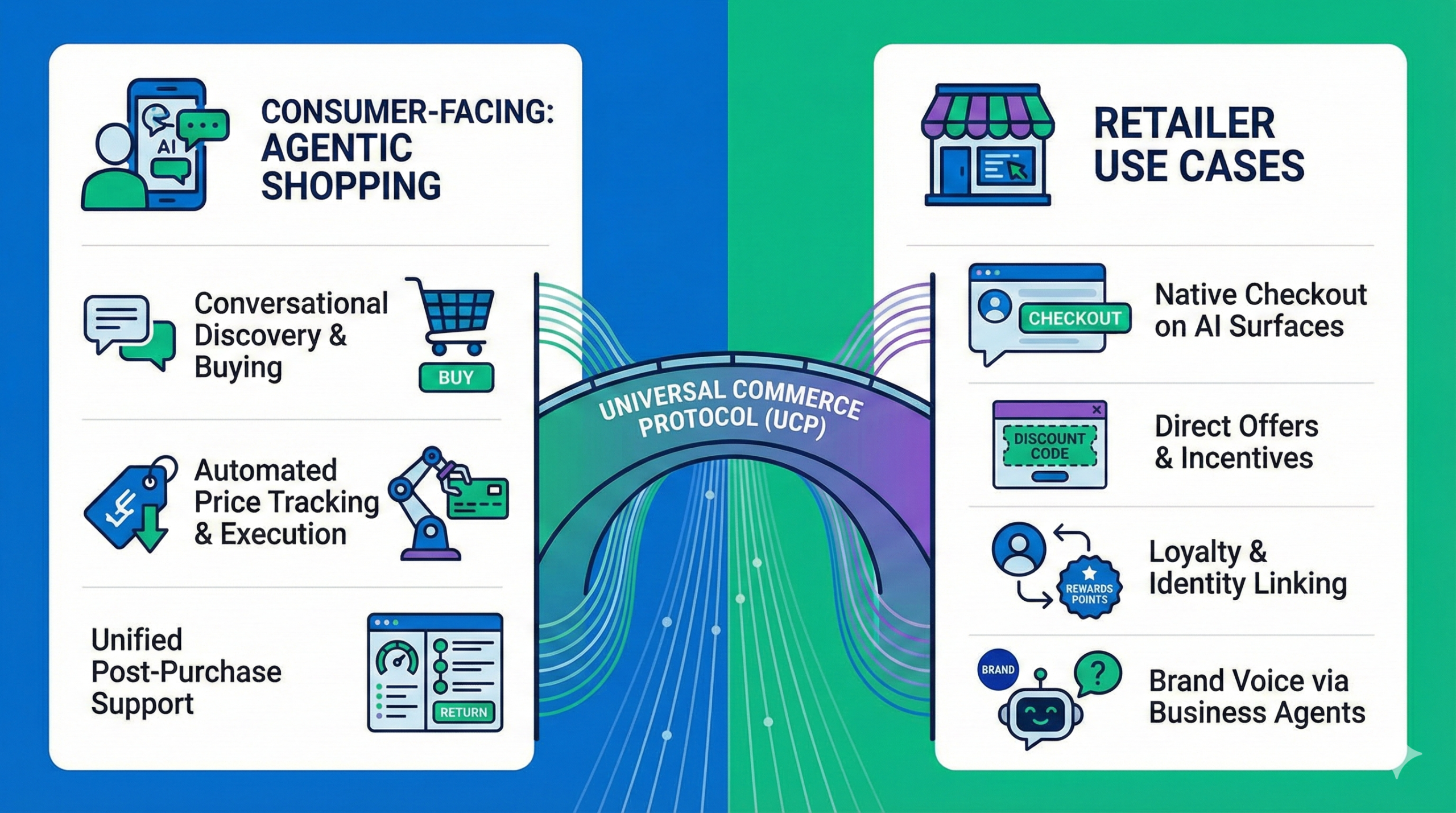
For years, retailers have imagined their ideal customer: affluent, loyal, easily reached and delighted to spend an evening browsing their website.
A different customer is emerging. It has no eyes for the homepage, no patience for the loyalty pop-up and no emotional attachment to the photograph of a man looking successful in a £180 jumper.
It has instructions.
Personal AI agents are beginning to change who does the shopping. That could change who makes the money.
Instinct is an early example. Founder Noah Shinn describes an assistant you can text or call, capable of using a computer and phone to carry out tasks. Early users reportedly bought groceries, planned trips and cancelled subscriptions. In November, Shinn said nearly 40% of users connected a personal credit card within three weeks. That is a founder-reported figure from an early adopter audience, rather than evidence of mainstream adoption. Nevertheless, it signals a willingness to delegate something more consequential than writing emails.
Connecting a credit card is where the commercial story gets interesting. The assistant moves closer to the transaction. Everyone who previously stood between the consumer and that transaction has something to think about.
Instinct is part of a wider movement. Meta’s Muse launched with capabilities including shopping and travel booking. Specialist shopping agent Wizard launched in February with product recommendations and a native Best Buy checkout integration. These products differ in scope and autonomy, but they share an ambition: compress the distance between wanting something and getting it.
Much of ecommerce occupies that distance.
Consider an ordinary purchase. You need a dishwasher. You open several tabs, compare confusing model numbers, investigate delivery, read reviews and discover that installation costs extra. Somewhere along the way, a website asks whether you would recommend it to a friend.
You have known this website for eleven seconds.
A capable personal agent could take a different brief: find a dishwasher that fits this space, is quiet enough for an open-plan kitchen, costs less than £600 installed and arrives before Friday. Show me the best two options.
That scenario illustrates the strategic change. The consumer specifies the outcome. Software handles more of the selection.
For retailers, the opportunity is a better-qualified customer arriving with clear requirements. The threat is losing the chance to influence those requirements along the way.
A retailer might fulfil the order while somebody else owns the conversation, remembers the preferences and gets asked first next time. Sales can survive while customer relationships weaken.
Advertising makes this especially awkward. Reuters reported this month that Amazon has blocked Muse while Walmart has enabled third-party agent shopping. Amazon says external agents have not yet materially affected its advertising business. The tension is nevertheless clear: purchases made through assistants could reduce exposure to sponsored placements on retailers’ own sites.
An agent that efficiently completes a shopping list may be an excellent customer service and a disappointing advertising audience.
Brands should resist declaring marketing dead. People still buy identity, pleasure and belonging. A shopper can instruct an assistant to buy a specific brand. In that case, brand preference becomes a powerful constraint on the agent’s decision.
The pressure is likely to fall hardest on products consumers consider interchangeable. When the instruction is simply “find something suitable”, reliable availability, total cost, delivery and returns become easier to compare.
My expectation is that agents will make weak differentiation more expensive to maintain. They may also reward retailers whose operational competence exceeds their marketing budget.
Travel offers an even stronger reason to delegate.
Planning a family holiday can resemble running procurement for a small government department. Flights, bags, transfers, room configurations, cancellation conditions and the discovery that “near the beach” describes a state of mind.
An agent that understands the family’s actual requirements could remove hours of coordination. The valuable capability is connecting the details: whether the flight arrival works with the transfer, whether the hotel accommodates everyone, whether a cheaper fare remains cheaper after luggage.
Parts of this journey are already moving into conversational interfaces. In August, Google announced hotel booking within AI Mode, initially rolling out in US English with partners including Booking.com, Expedia, Hilton and Marriott. Users review the details and complete payment; the hotel or booking platform remains responsible for the booking and customer service. This is a concrete shift in distribution, although it is different from handing an assistant unrestricted control of an entire holiday.
For hotels and airlines, that creates another negotiation over access to demand. A supplier may gain bookings while becoming less visible to the traveller making them.
Existing travel platforms also have substantial advantages: inventory, payment infrastructure and experience handling things going wrong. An attractive itinerary is easy to admire. Resolving a cancelled flight at midnight is where a service earns its position.
That distinction matters because the technology remains fallible. Reporting on Instinct has described booking mistakes and unwanted cancellations. BCG’s recent consumer research found that only 4% would allow an agent to complete a purchase independently. Enthusiasm for assistance is running ahead of willingness to surrender control.
The sensible near-term model is graduated trust: research first, recommendations next, explicit approval for consequential purchases. Reliability will determine how quickly that boundary moves.
There is also a question the industry should answer before celebrating its new intermediaries: who pays the assistant?
Subscriptions, commissions and advertising create different incentives. A service paid by merchants may still deliver excellent recommendations, but customers deserve to understand how commercial relationships influence the shortlist. A friendly conversational interface does not resolve a conflict of interest.
For retail and travel leaders, the immediate work is practical. Make inventory accurate. Make prices complete. Make policies understandable. Ensure an authorised agent can transact, and ensure a human can resolve the failure when it cannot. Measure completed, profitable orders and repeat business alongside website visits.
And give customers a reason to request your company by name.
Instinct may become a major business or an early chapter in someone else’s success. Its long-term position remains uncertain. The behaviour it represents deserves attention now.
Consumers are testing whether they can outsource the tedious parts of consumption. Businesses are discovering how much of their economics depends on those tedious parts.
The next competition will be to earn a place in the customer’s instructions.